WTC Insights x Adah Parris
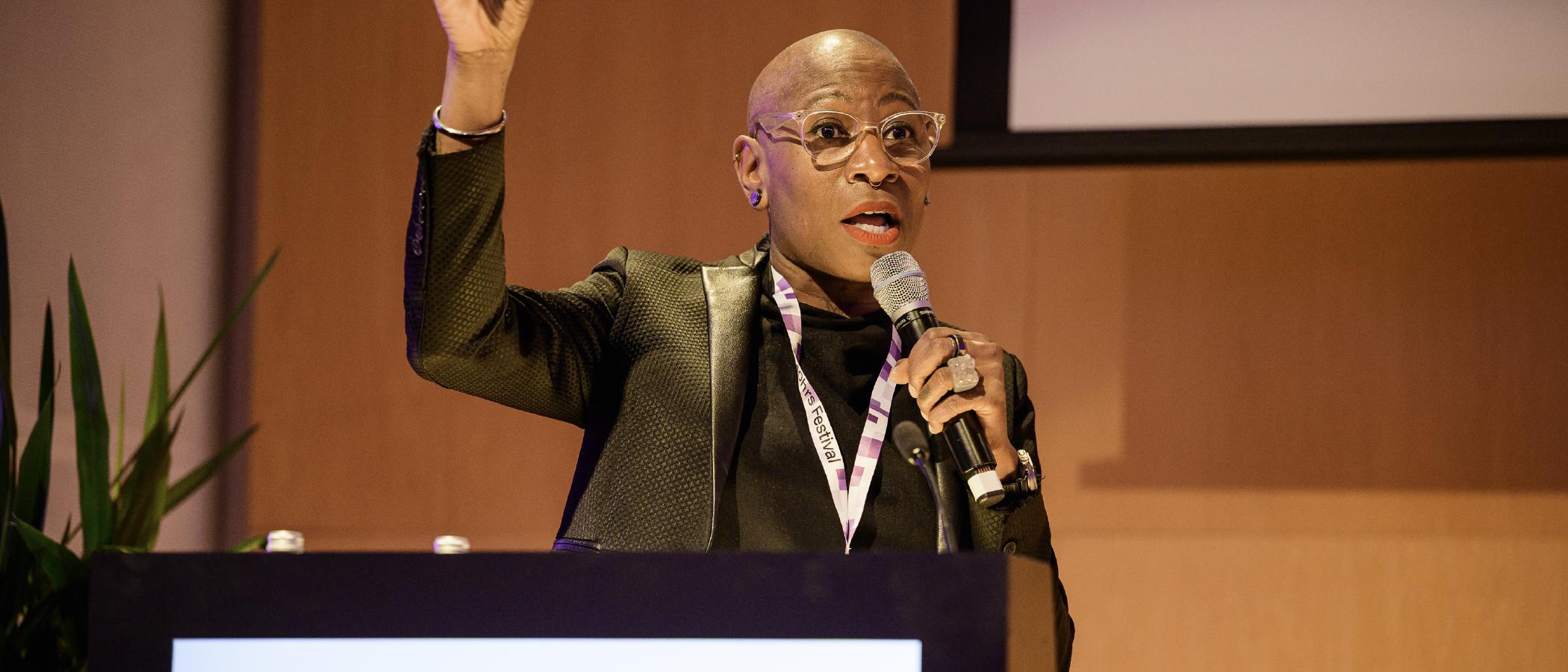
Adah Parris on why presence may be our most advanced technology
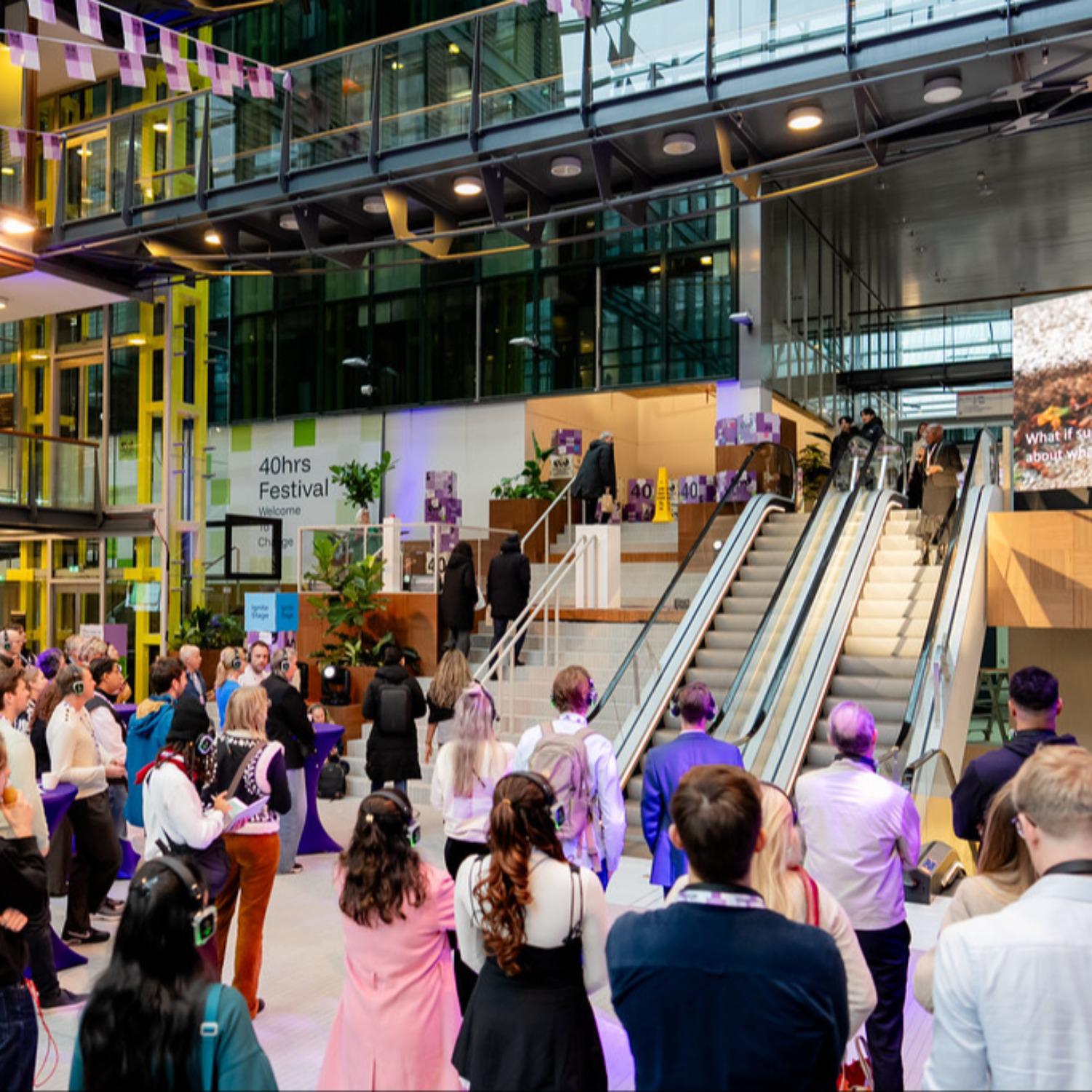
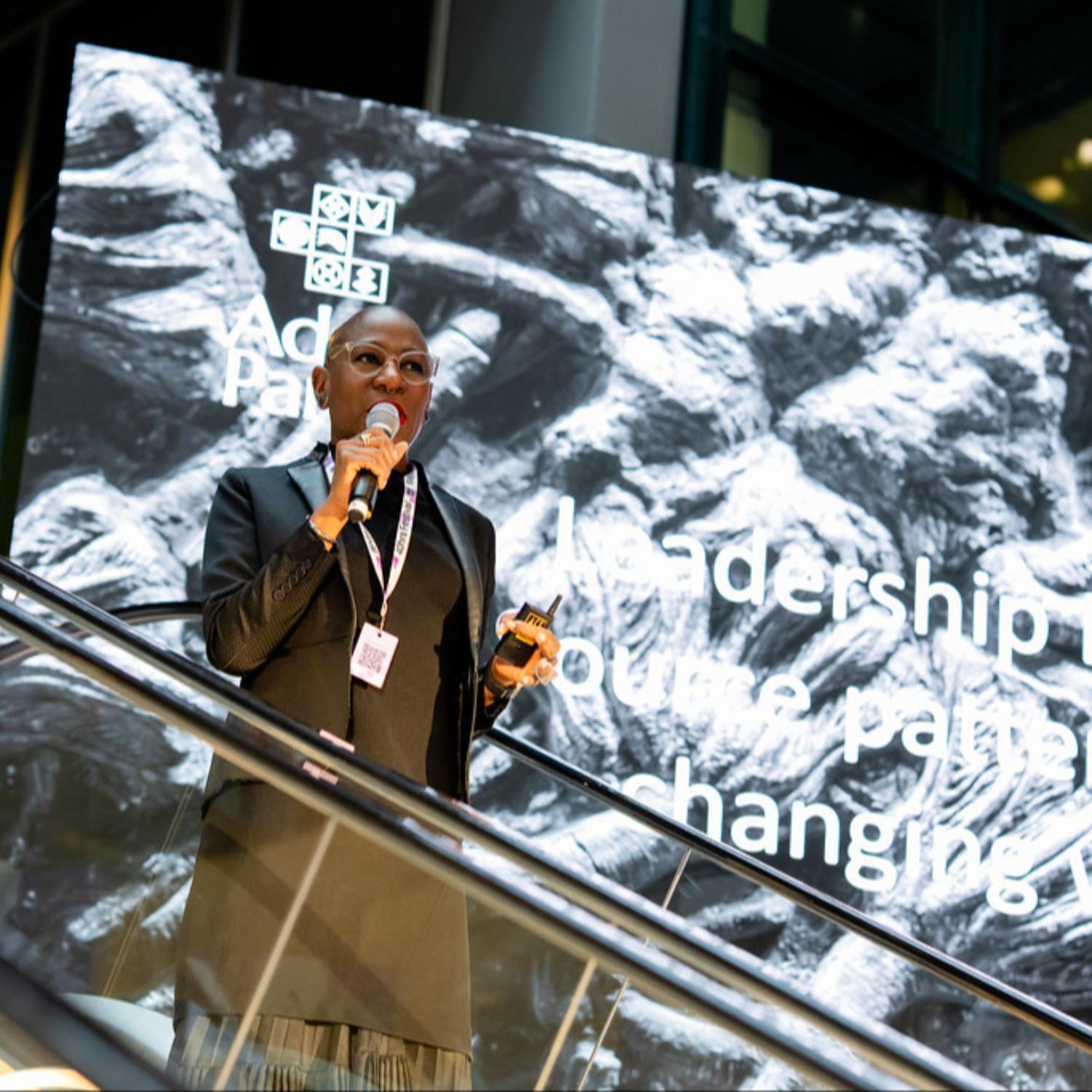
In celebration of our 40th anniversary, we hosted a 40-hour-long ‘Welcome To Change’ festival and brought together an exceptional group of thinkers and leaders on topics in Finance, Impact and Technology. Futurist Adah Parris shared a perspective that lingered long after the talk ended. Not a prediction of what comes next, but a deeper question on how awareness itself can become our most advanced technology.
In 2024, Adah Parris was diagnosed with ADHD. A lifetime of being told her mind was “distracted” suddenly made sense. Her tendency to notice patterns everywhere, once dismissed as noise, turned out to be a strength. These patterns, she realised, were data points: invisible connections many of us are trained to ignore.
Pattern recognition, in her view, is not about chaos. It is about deep listening. It is about sensing relationships: between systems, people and technologies. It is about noticing when something feels off. That feeling, she suggests, matters more than we tend to recognise or acknowledge.
Raising uncomfortable questions
We have built AI around efficiency, optimisation and prediction, but in the process, we’re removing our sense of intuition. The quiet inner signal that says pause.
According to Parris, we are living in a moment of tension. We always have, but digital technologies have amplified the call-and-response signals. Across industries, cultures and technologies, she sees recurring patterns orbiting three core forces: power, paradox and presence.
Power is shifting, but it is never disappearing.
Paradox is unavoidable, since multiple truths can coexist.
And presence is eroding, precisely when it is most needed.
This raises an uncomfortable question: what if we are measuring the wrong things when we talk about success? What if success is not only about what we achieve, but about the quality of attention we bring to our decisions? Too often, Parris notes, we don’t even know which questions to ask.
“Perhaps AI is not the frontier at all, but presence is.”
Presence is our most advanced technology
Presence, the ability to notice patterns, to pause, to sense relational impact, may be the most advanced technology we have. And one we are dangerously close to losing.
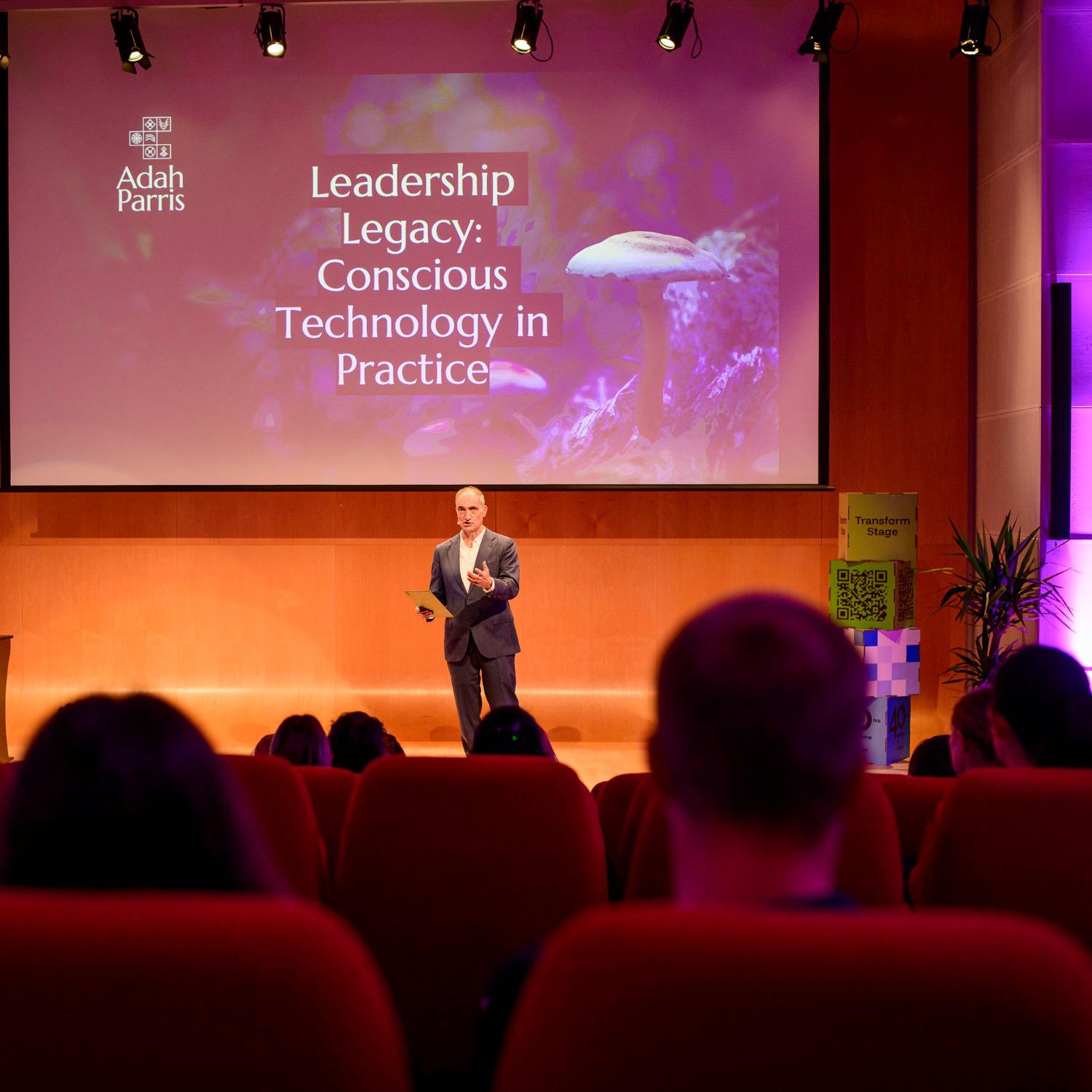
Adah Parris introduces Leadership Legacy, also the title of her new book (published by Wiley, 2026) as a living experiment in Source Patterns Intelligence (SPI), a GPT she created that reads global change through Power, Paradox & Presence. Not to predict the future, but to recognise patterns in the present. The system asks a fundamental question: what are the underlying patterns beneath everything we build and become?
Technology is inherently relational. It shapes how we relate to ourselves, to each other and to our environment. What we create, creates us. What we destroy, destroys us. To highlight some of the paradoxes. Ignoring these patterns does not make them disappear. It simply turns them into problems. Attention, however, changes things. It can shift the way we lead or view leadership. The focus moves from dominating complexity to stewarding attention. Space is created, not only physical space, but cognitive and ethical space, for better questions to emerge.
“Great leadership is about sensing before you act.”
Each week, Parris uses her system to take the pulse of the world: power shifts, paradoxes, signals of misalignment. Not to forecast outcomes, but to ask: where are we rushing? Where should we pause? What are we failing to see because we are moving too fast?
Your leadership legacy
Legacy, in this sense, is not a static outcome but a living system. It asks: what kind of leader do I want to be? What’s my legacy? We have grown accustomed to distancing ourselves from the consequences of what we build. Yet, Parris argues, separation is an illusion. We, our DNA and our nervous systems are embedded in the systems we design. Perhaps the work ahead, for leaders, technologists, institutions, and places, is not to move faster, but to move more consciously. To make space not only for new ideas, but for deeper attention. For questions that resist easy answers, yet matter deeply.
About Adah Parris
Adah Parris is a futurist, systems thinker and advisor working at the intersection of technology, power and human consciousness. Her work focuses on pattern recognition by helping leaders and organisations see the underlying forces shaping our systems, decisions and futures. Adah works with global organisations, founders and institutions to rethink progress, success and legacy in an age of rapid technological change.
Enjoyed this insight? Join us at WTC LIVE on April 21 for the AI edition. More info can be found here.